
How to Use Wristbands at Events: A Complete Guide for Australian Organisers
Planning wristband events in Australia? Discover how to choose, customise, and order the right wristbands for any event or occasion.

Written by
Luna Bell
Event Merchandise
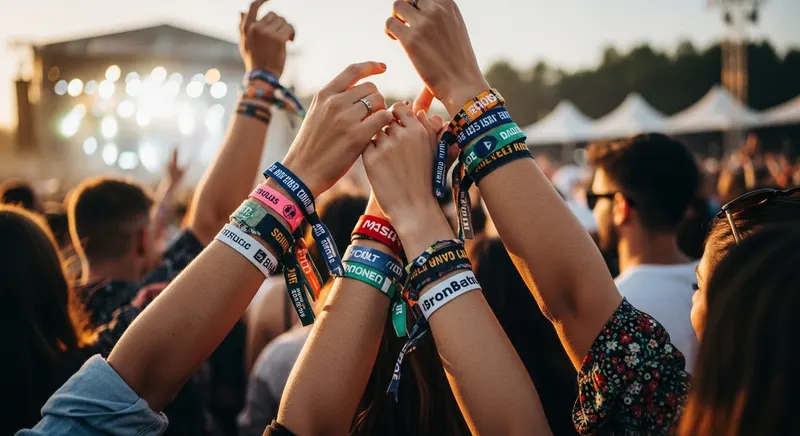
Whether you’re running a school fete in Adelaide, a corporate conference in Sydney, or a multi-day music festival on the Gold Coast, one thing quickly becomes clear: managing access, identifying attendees, and creating a cohesive event experience is harder than it looks. Wristband events — that is, events that use custom wristbands as part of their access control or branding strategy — have become a staple of well-organised gatherings across Australia. From simple Tyvek wristbands to full-colour silicone designs, these small but mighty items punch well above their weight in terms of functionality and brand visibility. This guide covers everything you need to know to make wristbands work hard for your next event.
Why Wristbands Have Become Essential for Event Management
It wasn’t long ago that event management relied on paper tickets, hand stamps, and clipboard guest lists. Those methods still exist, but they come with real limitations — ink fades, paper tears, and clipboards go missing at the worst possible moment. Custom wristbands solve many of these problems in one compact, wearable format.
For large-scale wristband events like festivals, expos, and school carnivals, wristbands allow staff and volunteers to quickly verify attendee access without interrupting the flow of foot traffic. At a Brisbane primary school sports day, for example, wristbands can colour-code different age groups or teams, helping teachers and parents keep track of hundreds of students across multiple activity zones. At a corporate product launch in Melbourne, tiered wristband colours can distinguish VIP guests from general admission attendees — a subtle but effective crowd-management tool.
Beyond logistics, wristbands carry genuine branding value. When attendees wear your organisation’s colours and logo throughout an event, you’re getting continuous, passive exposure at no extra cost. It’s a form of wearable marketing that’s surprisingly underutilised by many Australian event planners.
Types of Wristbands Commonly Used at Events
Not all wristbands are created equal, and the right choice depends heavily on the nature of your event. Here’s a breakdown of the most common options:
Tyvek Wristbands
Tyvek is a lightweight, tear-resistant synthetic material that’s widely used for single-day events. It’s cost-effective, available in a huge range of colours, and can be printed with text, logos, or sequential numbering. Most Tyvek wristbands use a self-adhesive closure, which makes them tamper-evident — once they’re on, they can’t be removed and reattached. Ideal for school fetes, charity fun runs, and one-day community events.
Silicone Wristbands
Silicone wristbands are the classic debossed or embossed rubber-style bands that have been popular since the early 2000s. They’re durable, reusable, and highly customisable with text, logos, and PMS-matched colours. For multi-day events or branded merchandise that attendees will keep long after the event ends, silicone is an excellent choice. Perth sporting associations, for instance, often distribute silicone wristbands to members as part of a seasonal merchandise package alongside items like personalised branded polo shirts and custom caps.
Fabric Wristbands
Woven or tyvek-fabric hybrid wristbands are popular for multi-day festivals because they’re comfortable to wear around the clock. Many feature a plastic or metal locking closure that makes removal extremely difficult, providing strong security for ticketed events. They can be woven with intricate patterns and logos, offering high perceived value.
Vinyl and Plastic Wristbands
These sit between Tyvek and fabric in terms of durability. They’re waterproof, reusable over short periods, and comfortable for events like waterparks or outdoor concerts where moisture is a factor. They often come with snap or slide-lock closures.
Decoration Methods for Custom Event Wristbands
The decoration method you choose will affect the final look, the minimum order quantity (MOQ), and your overall budget. For wristband events, the most common decoration approaches include:
- Debossing/Embossing — Most common for silicone wristbands. Your design is pressed into or raised from the material. Clean, long-lasting, and effective for simple text or logos.
- Ink-filled debossing (colour-fill) — A step up from plain debossing, where the recessed areas are filled with ink to make the design pop.
- Printed (pad printing or digital) — Used for Tyvek and vinyl options, allowing more complex artwork and multi-colour designs.
- Full-colour sublimation — Fabric wristbands can be sublimated for detailed, vibrant designs. This is particularly popular for events that want high-impact visual branding.
If you’re unsure which method suits your needs, it’s worth speaking with your supplier and requesting a physical sample before placing your full order. Most reputable Australian suppliers can turn around samples within a few business days.
Planning Your Wristband Order: Key Considerations
Getting your wristband order right requires a bit of planning ahead of time. Here are the critical factors to work through:
Minimum Order Quantities and Pricing
MOQs for event wristbands vary significantly by type. Tyvek wristbands typically have low MOQs — sometimes as few as 100 units — making them accessible even for small community events. Silicone wristbands generally require a minimum of 100–200 units, with pricing dropping considerably at 500+ and 1,000+. Fabric wristbands may carry higher MOQs due to the weaving process involved.
Bulk pricing tiers mean that ordering more almost always saves you money per unit. If you’re expecting 500 attendees, it may actually be more economical to order 600 wristbands to hit a better pricing tier — and you’ll have spares on hand for VIPs or last-minute registrations.
Turnaround Times
Standard turnaround for custom wristbands in Australia is typically 10–15 business days from artwork approval, though express options are often available. For wristband events with fixed dates, always build in buffer time. Order at least three weeks before your event if possible — more if you’re ordering from overseas. Local Australian suppliers can often accommodate rush orders, particularly for Tyvek wristbands.
Artwork Requirements
Most suppliers will require vector artwork (AI, EPS, or high-resolution PDF) for the best results. If your logo only exists in a low-resolution format, ask your supplier whether they can redraw it — many offer this as a value-added service. Agree on a digital proof before signing off on production, and pay attention to how your design reads at the small scale of a wristband.
Combining Wristbands with Other Event Merchandise
Wristbands rarely work in isolation. The most memorable wristband events combine multiple branded touchpoints. Consider pairing your wristbands with:
- Custom branded tote bags or event bags for registered attendees
- Branded travel coffee mugs or keep cups for conferences and corporate events
- Personalised branded mugs for speaker gifts or VIP packs
- Branded table coverings for registration desks — a branded tablecloth for your trestle table makes your event setup look polished and professional
- Custom text shirts or event t-shirts for staff, volunteers, or participants
If your event has sustainability goals, there’s a growing range of eco-friendly merchandise that pairs beautifully with reusable wristbands. Silicone is inherently reusable, but you could also explore wheat straw branded merchandise for other event giveaways, or check out our broader guide to sustainable promotional items for inspiration. A Melbourne council running a community environmental expo, for example, might distribute silicone wristbands alongside sustainable promo products to reinforce their green message.
Using Wristbands for Access Control and Tiered Experiences
One of the most practical applications of wristbands at events is tiered access management. By assigning different colours or designs to different ticket categories, you can manage crowd flow, allocate resources, and create premium experiences without complex ticketing infrastructure.
A simple three-tier system might look like this:
- General admission — standard Tyvek wristband in one colour
- Premium access — silicone wristband in a distinct colour with debossed event branding
- Speakers/staff/VIP — fabric wristband in a premium design, potentially included in a full merchandise pack with items like a gym towel or toiletry bag
This approach works equally well for a Canberra government agency hosting a stakeholder summit as it does for a Gold Coast expo targeting trade professionals. The wristband becomes the physical representation of the attendee’s tier — and it’s much harder to game than a paper pass or hand stamp.
For events where statistical outcomes matter, it’s worth noting that branded merchandise consistently outperforms other forms of event marketing. Our overview of trade show promotional product effectiveness statistics explores the data behind why physical branded items drive recall and engagement in ways that digital-only approaches simply can’t match.
Design Tips to Make Your Event Wristbands Stand Out
Even within the constraints of a small wristband surface, there’s room for creativity. Here are some quick design principles to keep in mind:
- Keep it legible — Wristbands are small. Prioritise your event name, logo, or key detail over complex artwork.
- Match your brand palette — Use PMS-matched colours where possible to stay consistent with your broader event branding.
- Include functional information — A website URL, event date, or hashtag can add functional value without cluttering the design.
- Consider glow-in-the-dark or neon options — For evening events or music-oriented wristband events, specialty silicone in bright or glow-in-the-dark colours adds a fun dimension.
- Sequence your numbering — For events where tracking attendance matters, ask your supplier about sequential numbering options.
Conclusion: Key Takeaways for Planning Wristband Events
Custom wristbands are one of the most versatile, cost-effective, and functional items in the event merchandise toolkit. Whether you’re a school in Hobart organising a community day, a Darwin business hosting a staff training event, or a large-scale trade expo in Sydney, the right wristband strategy can improve your event’s professionalism and attendee experience simultaneously.
Here are the key takeaways to carry with you into your next event:
- Choose the wristband type based on event duration and security needs — Tyvek for single-day events, silicone or fabric for multi-day or premium occasions.
- Order early and in bulk — Allow at least three weeks lead time and take advantage of bulk pricing tiers to lower your per-unit cost.
- Use wristbands as part of a broader merchandise strategy — Pair them with branded bags, drinkware, apparel, and VMA promotional products for a cohesive attendee experience.
- Plan your artwork carefully — Use vector files, approve a digital proof, and keep the design simple and legible at small scale.
- Explore sustainable options — Silicone wristbands are already reusable, and combining them with eco-conscious event merchandise aligns with the values of a growing number of Australian organisations.
For a deeper dive into event wristbands specifically, don’t miss our dedicated resource on wrist bands for events — it covers even more detail on product specifications and supplier considerations to help you place a confident order.